How to Study for the ASVAB: An 8-Step Study Plan That Actually Works
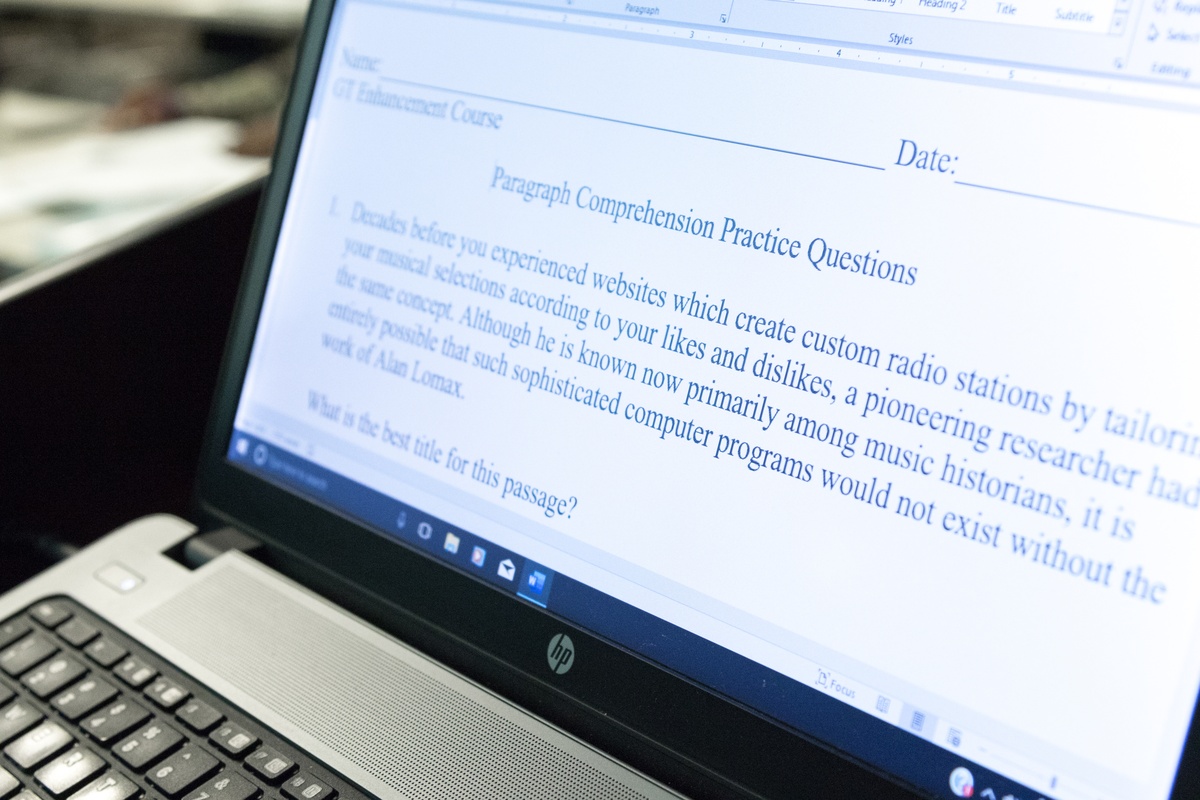
The Army runs a 3-week residential study program for soldiers scoring between 31 and 49 on the AFQT. The average participant raises their score by 17 points. One soldier walked in with a 38 and walked out with a 72. That is a 34-point gain in three weeks.
The difference between people who improve 30+ points and those whose scores barely move is not intelligence. It is having a process.
Most ASVAB study guides tell you to “identify your weaknesses” without explaining how to structure your time, which subtests actually matter for your goals, or what specific moves raise scores fastest. That is not a plan.
This is an 8-step plan for how to study for the ASVAB over 6–8 weeks, adaptable to 30 days if that is all you have. Each step builds on the last. If you want to see what scores you need for specific jobs, run your numbers through our All-Branch ASVAB Calculator. If you have not tested yet, take a practice test to get your baseline first.
This plan works whether you are testing for the first time or retaking after a low score. The steps are the same. The timeline compresses or expands based on what you have.
Want this plan in PDF form? We'll send it.
Free 6-page 30-day study plan plus a 5-email crash course on AFQT and line scores. Sent in the next few minutes.
No spam. Unsubscribe any time.
Step 1: Set Your Target Score Before You Study a Single Page
“I want a high score” is not a target. “I need a 50 AFQT and a 110 GT to qualify for 35F Intelligence Analyst” is a target. That distinction changes how you spend every hour of study.
Every branch has a minimum AFQT score just to enlist. Here are those minimums:
| Branch | Diploma | GED |
|---|---|---|
| Army | 31 | 50 |
| Marines | 32 | 50 |
| Navy | 35 | 50 |
| Air Force | 36 | 65 |
| Space Force | 36 | 65 |
| Coast Guard | 32 | 50 |
Your AFQT score determines whether you can enlist. Your composite scores determine which jobs you qualify for. They are calculated differently and come from different subtest combinations.
AFQT uses four subtests: Arithmetic Reasoning (AR), Word Knowledge (WK), Paragraph Comprehension (PC), and Mathematics Knowledge (MK). Composites vary by branch. Army GT combines AR with Verbal Expression (WK and PC), then rescales the result. A GT of 110+ is required for most technical and intelligence MOS across Army, Marines, and Navy. Navy nuclear rates require combinations of EI, MC, MK, and GS. Air Force technical jobs depend on composites like Electronics (E): GS + AR + MK + EI.
Pick 2–3 jobs you want and find their composite requirements on your branch's recruiting website or through your recruiter. Then set your AFQT target at least 10 points above your branch minimum. Use the All-Branch ASVAB Calculator to see exactly which jobs your current scores unlock. Check ASVAB Scores Explained for the full breakdown of how composites work per branch.
Milestone: Write down your target AFQT score and 2–3 composite targets tied to the specific jobs you want. Tape them where you study. These numbers drive every decision in the next 7 steps.
Step 2: Take a Baseline Practice Test to Find Your Starting Point
The most common study mistake is opening a prep book at page 1 and working through everything equally. You end up spending the same time on subtests where you already score well and subtests where you are actually bleeding points.
Take a full, timed practice test before you study anything. Score each subtest separately and convert to a percentage so you can compare across subtests with different question counts.
Then rank your subtests from weakest to strongest and split them into two buckets:
AFQT Bucket (AR, WK, PC, MK)
These four subtests control your enlistment eligibility. Your weakest AFQT subtest is your highest-leverage study target.
Composite Bucket (GS, EI, MC, AS, AO)
These drive job qualification scores. Prioritize based on the composites you identified in Step 1.
Why does your weakest AFQT subtest matter most? The AFQT formula: 2VE + AR + MK. VE (Verbal Expression) combines your Word Knowledge and Paragraph Comprehension scores, and it gets doubled. A 5-point improvement in VE translates to 10 AFQT points. A 5-point improvement in AR translates to 5 AFQT points. Same effort, double the payoff on the verbal side.
So if WK or PC is your weakest AFQT subtest, fixing it has twice the impact on your overall score.
Milestone: You have a ranked list of subtests from weakest to strongest, sorted into AFQT and composite buckets. You know which single subtest gets the most study time.
Step 3: Build a 6-Week Study Schedule You Can Actually Follow
Documented cases of 30+ point AFQT gains share one trait: structured daily practice over 6–8 weeks at 60–90 minutes per day. The Army's 3-week intensive averaged 17-point gains not because those soldiers crammed harder, but because the program had structure. One focused 90-minute session beats three scattered 30-minute sessions every time.
Here is the 6-week framework:
Weeks 1–2: Diagnose and Review
Complete your baseline test from Step 2, identify weak areas, review foundational concepts in your 2 weakest subtests. If math is your gap, rebuild foundations now: fractions, percentages, basic algebra. Build the habit of showing up daily.
Weeks 3–4: Deep Focused Study
70% of study time on your weakest AFQT subtests, 30% on composite subtests tied to your target jobs. Start taking full timed practice tests weekly. This is where the real gains happen.
Weeks 5–6: Test and Refine
Weekly full practice tests, review every wrong answer, drill timed mini-sets on remaining weak spots. Shift from learning new material to performing under test conditions. Do not introduce new topics in the final week.
If you only have 30 days, compress the same three phases: 5 days diagnose, 15 days deep study, 10 days test and refine. Add a mid-plan practice test on Day 13 to measure progress. The phases do not change. The timeline does.
A sample Week 3 day at 90 minutes: 10 minutes reviewing flashcards from previous sessions, 50 minutes drilling your weakest AFQT subtest with timed practice problems, 15 minutes on a composite subtest, 15 minutes writing down everything you learned without looking at your notes.
For a detailed breakdown of what to study in each subtest, check our ASVAB Study Guide. Six weeks at 60 minutes per day equals 42 hours total. Thirty days at 90 minutes per day equals 45 hours. Pick the path you can commit to.
Milestone: You have a written schedule with dates, daily time blocks, and which subtests you are covering each week. It is on your wall or in your phone. Not in your head.
Step 4: Prioritize the Four AFQT Subtests That Control Your Eligibility
Most people treat all nine ASVAB subtests equally. That is a mistake. Four subtests control your AFQT, and one of them counts double.
VE is your Verbal Expression score, which combines Word Knowledge and Paragraph Comprehension. Because VE is doubled in the formula, improving WK or PC by 5 raw points raises your AFQT by roughly 10 points. Improving AR by the same 5 points raises your AFQT by 5. Same study effort, different math. A test-taker with a WK of 40 and an AR of 50 should fix WK first, because the doubled multiplier makes every point of improvement worth twice as much.
That changes your prioritization:
Tier 1 (Highest Leverage): Word Knowledge + Paragraph Comprehension
VE is doubled in the AFQT formula. These two subtests give you the most AFQT points per hour of study. If you are short on time, this is where you live.
Tier 2: Arithmetic Reasoning
AR contributes to your AFQT and appears in 6 of 10 Army composite scores, more than any other subtest. It also drives the GT score by combining AR with Verbal Expression (WK and PC), then rescaling the result. It is the single most important composite across Army, Marines, and Navy. A GT of 110+ is required for most technical MOS. Improving AR lifts your AFQT and GT simultaneously.
Tier 3: Mathematics Knowledge
Contributes to AFQT and several technical composites. Important, but lower leverage than VE and AR because it is not doubled and appears in fewer composites.
Beyond these four, prioritize the subtests that feed the composites for your target jobs. If you want to be a Navy Nuke, you need EI, MC, MK, and GS. If you want Army Infantry, the key composites pull from AR, AS, and MC. Your Step 1 targets determine what matters beyond the AFQT.
Check ASVAB Scores Explained for the complete list of composite formulas by branch.
Milestone: If you only have 4 weeks, 60% of your study time goes to WK, PC, and AR. The rest splits between MK and your composite subtests.
Step 5: Study Each Subtest With the Right Tactics
Studying Word Knowledge the same way you study Arithmetic Reasoning is like training for a sprint the same way you train for a marathon. Different subtests test different cognitive skills and need different approaches.
Verbal Subtests (WK + PC)
Word Knowledge: This is a vocabulary test, and memorizing individual words one by one is the slowest possible approach. Learn word roots, prefixes, and suffixes instead. About 50 common Latin and Greek roots unlock hundreds of ASVAB words. “Bene” means good (beneficial, benevolent, benediction). “Mal” means bad (malicious, malfunction, malnourished). Build flashcards with the word used in context, not just bare definitions. Read challenging material for 15 minutes daily, anything a level above your comfort zone.
Paragraph Comprehension: Read the questions before you read the passage. You are not reading for enjoyment. You are hunting for specific information. Practice under time pressure because PC has tight timing on the CAT-ASVAB. Focus on two skills: identifying the main idea and making inferences from what is stated.
Math Subtests (AR + MK)
Arithmetic Reasoning: The math itself is rarely harder than basic algebra. The real skill is translating English into equations. “A train leaves Chicago at 60 mph” is a distance-rate-time setup. Master three categories: ratios and percentages, distance-rate-time, and work problems. Khan Academy is excellent for rebuilding foundations here.
Mathematics Knowledge: Straight math, no word problems. Algebra and geometry dominate. Memorize key formulas: area of a circle, Pythagorean theorem, quadratic formula. Work every problem by hand. There is no calculator on the ASVAB. If you are running out of time on math subtests, practice setting up problems quickly. The setup is the bottleneck, not the computation.
Technical Subtests
General Science (GS): Breadth over depth. Cover basic biology, earth science, physics concepts, and chemistry.
Electronics Information (EI): Know Ohm's law (V = IR), understand series vs. parallel circuits, learn basic electrical terminology.
Mechanical Comprehension / Auto & Shop (MC/AS): Simple machines (levers, pulleys, gears), basic engine components, common shop tools. Hands-on experience helps, but diagrams and practice questions can close the gap.
Milestone: You have a specific tactic for each subtest you are studying. Roots and flashcards for WK. Timed passage drills for PC. Word problem translation for AR. Not just “study math.”
Step 6: Use Active Recall and Spaced Repetition to Lock In What You Learn
Highlighting a textbook. Re-reading your notes. Watching YouTube videos on loop. These feel productive. They barely move test scores. The techniques that actually work feel harder, because they force your brain to retrieve information instead of passively absorbing it.
Active recall means closing the book and writing down everything you remember. Use flashcards where you produce the answer, not just recognize it from a list of options. After every practice set, write down why you got each wrong answer wrong. Not just “I missed it” but the specific gap: “I did not know the formula for circumference” or “I misread what the question was asking.”
Spaced repetition means reviewing material at increasing intervals: 1 day after learning, then 3 days, then 1 week, then 1 month. Your brain consolidates memories during the gaps between reviews. For Word Knowledge vocabulary, 15 minutes per day of spaced flashcard review locks in 200+ words over 4 weeks. Vocabulary memorization through flashcards takes 2–3 weeks of daily practice before it sticks, so start early in your plan.
Structure every study session the same way:
| Block | Time | Activity |
|---|---|---|
| Review | 10 min | Flashcards from previous sessions (spaced repetition) |
| Learn | 50–60 min | New material + practice problems on your focus subtest |
| Recall | 10–15 min | Close everything, write down what you learned without looking |
Flag anything you could not recall during that final block. Those gaps become your first review items next session.
Milestone: Every study session ends with 10 minutes of eyes-closed recall. If you cannot explain it from memory, you have not learned it yet.
Step 7: Take Timed Practice Tests Weekly Starting Week 3
A practice test you take but never review is a wasted hour. The test itself is not the learning event. The review afterward is where the gains come from.
Starting in Week 3, take one full timed practice test per week. Time pressure matters because the CAT-ASVAB enforces strict per-subtest time limits, and they vary dramatically:
| Subtest | Questions | Time | Per Question |
|---|---|---|---|
| Arithmetic Reasoning | 15 | 55 min | 3 min 40 sec |
| Word Knowledge | 15 | 9 min | 36 sec |
| Paragraph Comprehension | 10 | 27 min | 2 min 42 sec |
| Mathematics Knowledge | 15 | 31 min | 2 min 4 sec |
Look at that range. Word Knowledge gives you 36 seconds per question. You either know the word or you do not. Arithmetic Reasoning gives you nearly 4 minutes. These require completely different pacing strategies, and the only way to internalize that is timed practice.
Practice test schedule:
Week 3
First full timed practice test. Detailed review of every wrong answer.
Week 4
Second full test plus focused mini-tests (20–30 questions) on your weakest subtests.
Weeks 5–6
One full test per week plus daily timed drills on remaining weak areas. Track your scores across all tests to see the trend.
Take your practice tests through our practice test tool to get subtest-level scoring.
Milestone: You have a notebook or spreadsheet tracking every practice test score by subtest. You can see the trend line. If a subtest score is flat, redirect study time there.
Step 8: Know the CAT-ASVAB Algorithm Before Test Day
The CAT-ASVAB is not a fixed test. It is a computer-adaptive test that adjusts question difficulty based on your answers. How you approach the first few questions on each subtest matters more than most people realize.
The first 5 questions per subtest set your difficulty band. Get them right and the algorithm moves you into a harder tier where even wrong answers score better than easy correct answers in a lower tier. Get the first few wrong, and you are fighting uphill for the rest of that subtest.
First 5 questions are highest stakes
Take extra time on these. Double-check before submitting. The scoring payoff is disproportionate.
You cannot go back
Once you submit an answer, it is locked permanently. Read each question completely, eliminate wrong answers, then commit. There is no review screen.
No penalty for wrong answers
An educated guess always beats a blank. If you are stuck, eliminate what you can and pick from what is left.
Each subtest has its own clock
Finishing Word Knowledge early does not bank you extra time on Arithmetic Reasoning. Manage each subtest's time independently.
After a forced guess on a question you are unsure about, pay extra attention to the next question. Getting it right helps the algorithm recalibrate your ability level upward. One bad question does not tank your score if you recover on the next one.
Milestone: You understand how adaptive scoring works and you have a pacing plan for each subtest. No surprises on test day.
FAQ
How long should I study for the ASVAB?
Six to eight weeks at 60–90 minutes per day is the sweet spot for most people. The Army's structured 3-week program averaged 17-point AFQT gains, but that was a full-time residential course. If you are studying part-time around work or school, give yourself 6 weeks minimum. You can compress to 30 days if needed, but expect smaller gains unless you increase daily study time to 2+ hours.
What ASVAB score do I need for each military branch?
AFQT minimums with a high school diploma: Army 31, Marines 32, Navy 35, Air Force 36, Space Force 36, Coast Guard 32. GED holders need higher scores: Army 50, Navy 50, Air Force 65. These are enlistment floors. Most specific jobs require composite scores significantly higher. Use our All-Branch ASVAB Calculator to see what your target MOS or rating actually requires.
Can I retake the ASVAB if I score low?
Yes, but there are waiting periods. One month after your initial test, one month after your first retake, then 6 months between further retakes. Your most recent score counts, not your highest. If you retake and score lower, you are stuck with the lower number. If your score jumps 20+ AFQT points within 6 months, MEPS may require a Confirmation Test to verify the improvement. Do not retake without a structured study plan.
Should I study all 9 ASVAB subtests or just the AFQT ones?
Start with the four AFQT subtests (WK, PC, AR, MK) because they control whether you can enlist at all. Then add the subtests that feed into composite scores for your target jobs. If you want Army Combat Medic (68W), you need a high ST composite, which pulls from GS, VE, MK, and MC. If you only care about enlisting with no specific job preference, focus on the AFQT four.
What is the difference between the CAT-ASVAB and the paper ASVAB?
The CAT-ASVAB is computer-adaptive: 135 questions, 198 minutes. Question difficulty adjusts based on your answers, and you cannot go back to previous questions. The paper ASVAB (P&P-ASVAB) is fixed: 225 questions, 149 minutes, same difficulty for everyone, and you can review answers within each subtest. Most people take the CAT-ASVAB at MEPS or MET sites. The paper version is mainly used for large group testing at schools or military installations.
My recruiter said I do not need to study. Is that right?
Your recruiter wants to get you to MEPS. A low score limits your job options to whatever is left, and retakes come with waiting periods that push your ship date. The Army's own Academic Skills Development Program exists because studying works. A 17-point average AFQT gain in 3 weeks proves the point. Study.
Does the ASVAB I took in high school count?
If you took the ASVAB-CEP (Career Exploration Program) through your high school, that score does not count for enlistment. The CEP is a career exploration tool, not the enlistment-qualifying test. You need to take the full ASVAB at a MEPS or MET site. If you took the actual enlistment ASVAB (not the CEP version) within the past 2 years, those scores may still be valid. Check with your recruiter to confirm.
The appearance of U.S. Department of Defense (DoD) visual information does not imply or constitute DoD endorsement.
Find Your Weak Spots Before You Start Studying
Take a free timed practice test to get your baseline subtest scores. Know exactly where to focus before you spend a single hour studying.
Take the Free Practice Test